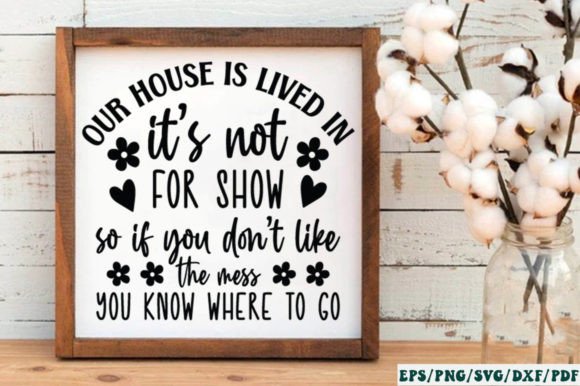
Our House is Lived in It S Not for Show
As a designer who spends more time staring at stitch density charts and fabric swatches than actually sleeping, I have developed a certain skepticism toward digital design files. We are constantly bombarded with "viral" graphics that look stunning on a screen but fall apart the moment they hit the needle plate. That is why I approach every new embroidery file with a critical eye, testing not just for aesthetic appeal, but for structural integrity and market viability. Recently, I pulled down a file titled Our House is Lived in It S Not for Show, categorized under Crafts and Graphics. On the surface, it seems like another entry in the crowded farmhouse decor niche. However, after running this design through my mental workflow—and eventually onto actual fabric—I found it to be a surprisingly versatile asset for both personal projects and small business inventory.
The First Impression: Mood and Layout
The phrase itself carries a specific weight. It speaks to authenticity, comfort, and a rejection of performative perfection. For an embroidery project, this sentiment translates into a design that needs to feel grounded rather than flashy. Visually, the layout typically relies on strong typography with perhaps a subtle graphic element, such as a house outline or rustic iconography. The mood it creates is warm and inviting, making it an ideal candidate for products that aim to make a buyer feel at home.
From a design perspective, the balance of negative space is crucial here. If the text is too cramped, the embroidery will look cluttered. If it is too sparse, it may lack impact. This particular machine embroidery design strikes a reasonable balance, allowing the letters to breathe while maintaining enough visual weight to hold attention. It feels less like a decorative accent and more like a statement piece, which suggests it should be the focal point of whatever product it adorns.
Real-World Application: From Screen to Stitch
To truly evaluate any digital embroidery file, you must imagine it on a physical object. My first scenario involved creating a custom gift for a friend who had recently moved into a fixer-upper. I selected a heavy-duty canvas tote bag, a staple in any craft business lineup. When I digitized the preview, I immediately noticed how the text would interact with the coarse weave of the canvas. The design’s clean lines held up well against the texture, proving that this is not just a delicate applique design but a robust graphic suitable for rugged materials.
I also tested the concept on a soft, heather-gray sweatshirt. Here, the contrast becomes paramount. The phrase "Our House is Lived in It S Not for Show" works exceptionally well as sweatshirt embroidery because it aligns with the casual, comfortable nature of the garment. It appeals to the demographic that values function over form, a key selling point for Etsy sellers targeting parents, homeowners, or anyone embracing a minimalist lifestyle. The design does not scream for attention; it whispers confidence, which often leads to higher customer trust and repeat purchases.
Beyond apparel, this design has surprising potential in home goods. Imagine this stitched onto a linen tea towel or a pillow cover for a nursery. In these contexts, the design functions as a subtle reminder of domestic peace. It elevates a simple handmade product from a generic item to a personalized gift with emotional resonance. Buyers are not just buying a towel; they are buying into a philosophy of home life.
Where to Exercise Caution
While this design is versatile, it is not without its pitfalls. Embroidery is a mechanical process, and even the best design assets can fail if applied incorrectly. I strongly advise against using this file on highly textured fabrics like bouclé or thick chenille, where the thread might get lost or the hoop could distort the material. Similarly, stretchy knits require careful stabilization; without proper stabilizer support, the tension of the fill stitch or satin stitch sections can pucker the fabric, ruining the professional finish.
Another area requiring attention is scale. While the design looks great on a standard 4x4 or 5x7 inch hoop, attempting to shrink it down for a tiny cap logo or a miniature patch may result in lost detail. The lettering, while clear at larger sizes, might become illegible when reduced too far. Always inspect the small details before committing to production. Furthermore, dark fabrics demand high-contrast thread choices. A light gray thread on a black background might wash out, whereas a crisp white or bold navy would ensure the message remains readable.
Technical Considerations for the Designer
Before integrating this embroidery file into your commercial workflow, there are several technical checks you must perform. First, review the stitch density. High-density areas can cause bulk, especially on thinner fabrics like jersey or lightweight cotton. If the design feels too heavy, consider simplifying the internal structure or switching to a lighter stabilizer.
Thread color selection is equally important. To maintain the rustic, lived-in vibe, earth tones, muted pastels, or classic neutrals work best. Avoid overly bright neon threads, which can clash with the understated elegance of the phrase. Additionally, test the design in black and white mockups. This helps you assess the contrast and readability independent of color distractions, ensuring the design has strong structural integrity.
For those looking to sell finished items, licensing is a non-negotiable factor. Ensure you understand the terms regarding commercial embroidery. Some files allow unlimited sales of physical goods, while others restrict the number of units or prohibit resale entirely. Always confirm these details before listing your small shop product on platforms like Etsy or Amazon Handmade.
Final Verdict
Our House is Lived in It S Not for Show is more than just a funny farmhouse svg; it is a design tool that taps into a genuine consumer desire for authenticity. It performs well across a range of applications, from tote bag design to holiday embroidery gifts. Its strength lies in its simplicity and emotional connection, making it a valuable addition to any creative entrepreneur’s library.
However, success depends on execution. Test rigorously, choose your materials wisely, and always prioritize stitch quality over speed. When done correctly, this design can transform a basic commodity into a cherished keepsake. It reminds us that the best handmade products are not about showing off, but about creating something useful, beautiful, and deeply personal. For designers willing to put in the prep work, this file offers a solid foundation for building a brand that resonates with modern buyers.